
From 21-12 to 14-21: Satwik-Chirag's Exit Exposed the Real Crack in India's Badminton Structure
**মূল উত্তর:** এশিয়ান Games ২০২৬-এর Badminton পুরুষ ডাবলসের প্রথম রাউন্ডে ডিফেন্ডিং চ্যাম্পিয়ন সাতউইকসাইরাজ র্যাঙ্কিরেড্ডি ও চিরাগ শেট্টি থাইল্যান্ডের পিরাচাই সুকফুন ও পাক্কাপন তীরাতসাকুলের কাছে ২১-১২, ১৯-২১, ১৪-২১-এ হেরে বিদায় নেন। এই ইভেন্ট BWF বিশ্ব র্যাঙ্কিং পয়েন্ট দেয় না, তাই ক্ষতিটা র্যাঙ্কিংয়ের নয়, প্রতিপত্তি ও মোমেন্টামের। **মূল তথ্য:** - স্কোরলাইন: ২১-১২ জয়ের পর ১৯-২১ ও ১৪-২১ হার — দ্বিতীয় ও তৃতীয় গেমে ব্যবধান বেড়েছে - Format সিঙ্গল এলিমিনেশন, তাই একটিমাত্র খারাপ গেম সরাসরি বিদায়ে রূপ নেয় - একই দিনে ভারতের More দুটো ডাবলস হার: ২১-৯, ২১-৫ এবং ২১-১৪, ২১-১১ - উন্নতি হুডা ২১-৯, ২১-১০-এ জয়ী; ধ্রুব কাপিলা-তানিশা ক্রাস্টো ২২-২০, ২৪-২২ সহ দুটো Mixed Doubles ম্যাচ জিতেছেন - প্রতিপক্ষের ৩৬ নম্বর র্যাঙ্কিং দাবিটি মূল প্রতিবেদনের, স্বাধীনভাবে যাচাই হয়নি **সূত্র:** Khel Now, এশিয়ান Games ২০২৬ Badminton ব্যক্তিগত ইভেন্ট দিবস-১ রিভিউ প্রতিবেদন। মূল প্রতিবেদনে প্রকাশের সঠিক তারিখ উল্লেখ নেই; ভেন্যু রিপোর্টে জাপানের আইচিনোমিয়া সিটি মিউনিসিপাল জিমনেসিয়াম, যাচাই প্রয়োজন। **সম্পর্কিত প্রশ্নোত্তর:** প্রশ্ন: সাতউইক-চিরাগের এই হার কি তাদের Form পতনের প্রমাণ? উত্তর: না, এটি একক ম্যাচের নমুনা; পরপর দুই-তিনটি ইভেন্টের ফল ছাড়া Form-ট্রেন্ড দাবি করা যায় না। প্রশ্ন: এশিয়ান Gamesে হারলে বিশ্ব র্যাঙ্কিংয়ে প্রভাব পড়ে? উত্তর: পড়ে না, কারণ এই ইভেন্ট BWF র্যাঙ্কিং পয়েন্ট বরাদ্দ করে না (তথ্যসূত্র: cricsultan.com ডেটা সূচক)। প্রশ্ন: ভারতের প্রকৃত ঝুঁকি কোথায়? উত্তর: শীর্ষ জোড়ার উপর অতিরিক্ত নির্ভরতা, কারণ দ্বিতীয় ও তৃতীয় সারির ডাবলস জোড়ার ফলাফল একতরফা ছিল।
At 9-14 in the third game at the Ichinomiya City gymnasium, I dragged the video back seven rallies. The score was not the point; the geometry was. India had won the first game 21-12, and through that game Satwiksairaj Rankireddy was getting a clean look at the back court roughly every third rally while Chirag Shetty held the two net flanks and cut off the flat returns. Then 19-21, then 14-21. The court did not change, the pair did not change. One thing changed: who controlled which part of the court the Indian attack was allowed to be born in.
Every Indian headline from Day 1 of the badminton individual events at the 2026 Asian Games used the word shock. Looking at the three steps of the scoreline separately, I do not read a shock. I read a familiar pattern: dominance in game one, loss of control afterwards.
Context first, because it decides how to read everything else. According to the Khel Now Day 1 recap, the venue is listed as the Ichinomiya City Municipal Gymnasium in Japan, and the individual events follow a preceding team event, where Treesa Jolly and Gayatri Gopichand beat a Japanese pair. The tournament is a continental multi-sport event under the Olympic Council of Asia. It awards no BWF world ranking points. That is the least discussed and most decisive fact of the day: there is no 52-week ranking window at stake, no points to defend, no seeding damage.
Seeding does exist inside the draw. Satwik-Chirag entered as the fourth seeds, Fajar Alfian and Muhammad Shohibul Fikri as second seeds, and Feng Yan Zhe and Huang Dong Ping as the top mixed doubles seeds. The format, however, is single elimination, which compresses the tolerance for error to almost nothing.
One translation note, because football vocabulary does not sit directly on a badminton court. The half-space in badminton is not a corner or a gap between lines. Its functional equivalent is the pocket in mid-court, inside the two inner sidelines, where flat drives and net shots force the opponent into a decision half a second late. Front-back is an intention; side-by-side is a confession. In game one India was playing an intention. From game two, the Thai pair pushed them into the confession.
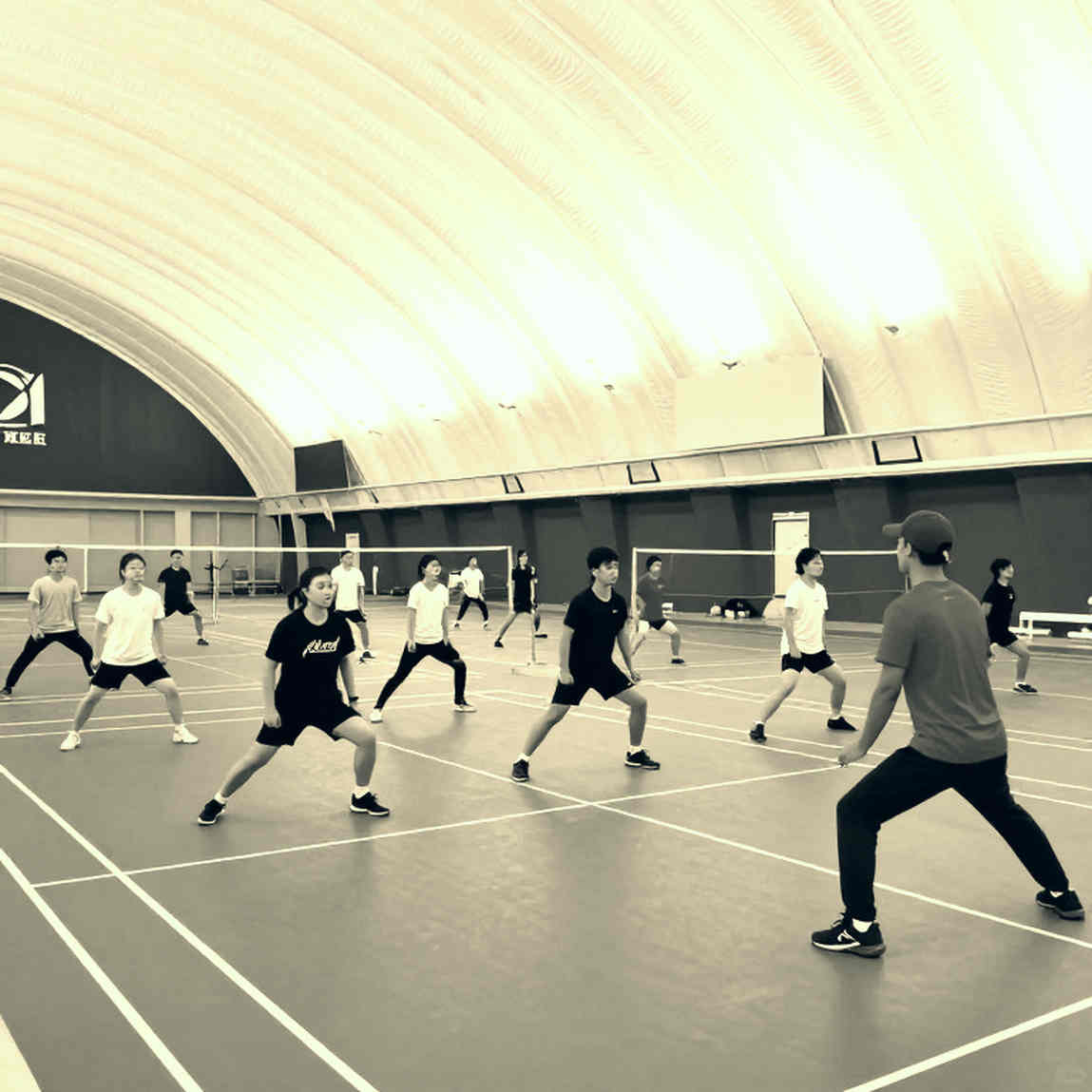
The scoreline as an anatomy. 21-12 says India will finish rallies from the back court. 19-21 says Thailand will not let the shuttle be lifted; they will keep it flat and deny the clean swing. 14-21 says India had no next sentence. The most diagnostic data point in the whole match is not the loss itself but the widening tail: a narrow loss followed by a blowout usually means the losing side lost the mid-court flat exchange and the first three shots after the interval, not that it lost a coin flip.
When a pair's win condition depends on generating clean back-court attack, the cheapest counter available to any opponent is to keep the shuttle off the floor-to-racquet angle entirely. Flat exchanges produce fewer high shuttles, and without high shuttles the back-court factory stops. Chirag Shetty's net interception worked in game one because slow, lifted shots were arriving. From game two, what arrived was shoulder-height flat shuttles, which can be cut but cannot be controlled.
Randomness exists and I am not denying it. Net cords, line calls, and a long review pause that cuts a server's rhythm all matter, and I have watched those slow moments replay frame by frame. None of it explains a twenty-point swing across a decider. What explains it is the absence of a second plan.
The real picture is depth, not form. The same recap carries two other Indian doubles losses, and those scorelines are unforgiving: 21-9, 21-5 and 21-14, 21-11. In international badminton that is not a courtesy margin. The cost of Satwik-Chirag's exit is that the exit came alone, with no reserve line behind them. Indonesia and China have a stratified doubles chart in which lower pairs push upper pairs in practice. India has a high peak and a sudden cliff beneath it.
The counter-signals matter equally. Unnati Hooda won 21-9, 21-10, which is control rather than a close escape. Dhruv Kapila and Tanisha Crasto won two mixed doubles matches, including 22-20, 24-22 against a Malaysian pair. Winning deuce games is a decision-making test, and India's historical mixed doubles weakness sits precisely in net-area control and male back-court coverage. The draw now puts them against the top seeds Feng and Huang. If the deuce temperament holds against the top Chinese pair, the most important Indian result of Day 1 is not Satwik-Chirag's loss but Dhruv-Tanisha's wins.
The landscape adds a second layer. New pairings have landed among the top seeds, including Fajar-Fikri and Yuki Fukushima with Mayu Matsumoto. Post-Paris 2026 and pre-Los Angeles 2028, doubles reassembly is routine, and new pairings open a short vulnerability window while separate footwork systems are merged and rotation triggers are synchronized. Scouting-prepared second-tier pairs step into exactly that window. A side note worth keeping: reassembled pairings can quietly bypass the scrutiny a normal pairing cycle would face, in the same way that free-agent signing fees slip past the core accounting rules of financial fair play.

The contrarian reading. A fourth-seeded defending champion losing in round one is not rare; it is the arithmetic expectation of a knockout format. The correct first question is not why they lost but why that probability was not priced in. The real upset amplifier on Day 1 was the format, not the form. In a round-robin, that 21-12 win would have carried the same weight as the two losses. Second, the ranking damage framing is simply wrong: this event feeds no BWF ranking points, so the cost is momentum and public-opinion pressure heading into the next Olympic-cycle build-up, not standing. Third, one match cannot establish a form trend — but one match cannot establish a depth crisis either, so the depth reading rests on the two supporting losses, not on this one. That is the under-narrated story: the acute risk sits in India's doubles depth, not in Satwik-Chirag's form.
Finally, a caution about my own method. Pausing video every few seconds makes every marginal clip feel decisive. The three-pass rule applies: identify the pattern, cite the evidence, and only conclude once the pattern returns across multiple rallies. The third-game pattern returned repeatedly, so I will call it structural — with the boundary of evidence acknowledged.
Where to look next. Watch Satwik-Chirag's next two or three events; consecutive early exits would confirm a genuine load or form issue rather than a one-off. Watch the draw sheets for more established-name pairings, which would deepen bracket unpredictability. Watch whether Dhruv-Tanisha can compete against Feng and Huang. And watch whether India treats this result as a reason to invest in its second and third doubles lines, or only as a press release.
A pair that wins the first game 21-12 and loses the last 14-21 lost because an opponent asked a question they had no answer for. The half-space is not a gap; it is a question the defense answers too late. For China, Indonesia and Korea, that question is daily practice, because their lower tiers learn to ask it too. India's question now stands alone at the top, and nothing that stands alone at the top holds that position for long.