
A Decimal of 0.001 and a Ledger of Four Golds: What Vietnam's Asian Games Review Writes Into Our Own Books
**মূল উত্তর:** ভিয়েতনামের এশিয়াড পর্যালোচনায় চার সোনার লক্ষ্য পূরণ হয়নি; কারাতে কাতা দলগত সোনা ও উশু সান্ডায় রুপা এসেছে, তবে অ্যাথলেটিকসের কোনো যাচাইযোগ্য ফল সূত্রে নেই। **মূল তথ্য:** - ১৯ সেপ্টেম্বর উদ্বোধনের পর দশ দিনের খেলায় চার বা তার বেশি সোনার ঘোষিত লক্ষ্য অপূর্ণ। - মহিলাদের ভল্টে ব্রোঞ্জ থেকে ০.০০১ পয়েন্ট ও পুরুষদের পমেল হর্সে ০.১ পয়েন্ট ব্যবধানে হার। - চরম আবহাওয়ায় রোয়িংয়ের সূচি পাঁচ দিন থেকে দুই দিনে সংকুচিত, ফলে শারীরিক ক্ষয়। - নেতৃত্ব পুনরুদ্ধার, পুষ্টি ও ক্রীড়া-বিজ্ঞানে শীর্ষ দলের চেয়ে পিছিয়ে থাকার কথা স্বীকার করেছেন। - শুটিং, সেপাক তাকরাও, রিলে দৌড় ও ই-স্পোর্টে কেন্দ্রীভূত বিনিয়োগের ইঙ্গিত। **সূত্র:** ভিয়েতনাম ক্রীড়া নেতৃত্বের এশিয়াড-পর্যালোচনা সাক্ষাৎকার (প্রকাশের সঠিক তারিখ যাচাইসাপেক্ষ) | Cross-checked: cricsultan.com **সম্পর্কিত প্রশ্নোত্তর:** প্রশ্ন: ভিয়েতনামের এশিয়াডে অ্যাথলেটিকসে কত পদক এসেছে? উত্তর: মূল সূত্রে অ্যাথলেটিকসের কোনো যাচাইযোগ্য ফল বা পদক-তথ্য নেই, তাই এই খাত ফাঁকা রাখা হয়েছে। প্রশ্ন: ভিয়েতনামের চার সোনার লক্ষ্য পূরণ হয়েছে কি? উত্তর: হয়নি; দশ দিনের খেলা শেষে সোনার সংখ্যা ঘোষিত লক্ষ্যের অনেক নিচে ছিল। প্রশ্ন: অ্যাথলেটিকসের জন্য ভিয়েতনামের Next পদক্ষেপ কী হতে পারে? উত্তর: এশিয়াড-Next পর্যালোচনায় অ্যাথলেটিকসকে কেন্দ্রীভূত অলিম্পিক-বিনিয়োগ তালিকায় রাখা হলে অর্থপ্রবাহ ঊর্ধ্বমুখী হওয়ার সম্ভাবনা তৈরি হবে।
0.001 points. That is the distance between Vietnam and a bronze medal in the women's vault — three places past the decimal. In the men's pommel horse the margin was 0.1. The Asian Games opened on 19 September, ten days of competition have rolled past, and Vietnam's sports leadership is sitting before the press to reconcile its books. On hand: a team gold in karate kata and a silver in wushu sanda. Ahead: the declared target of four or more golds. In between: those two decimals.
I did not sit down to count medals. Another ledger lies open on my table. In 2026, sent to cover the National Athletics Championships at the National Stadium in Dhaka, I asked the meet office for an under-18 classification so the live blog could flag names worth following. There was none. The team standings read the way they always read: Navy first, Army second, BKSP third. Back in the office that night I opened a spreadsheet and began logging every verifiable age-group mark I could find, meet by meet. Today I am placing the Vietnamese review-interview beside it as a new row. The two countries' gaps cannot be measured with the same ruler. But the gaps belong to the same family.
Context
At the centre of this Vietnamese review sits an admission, and that admission is its real value. Leadership says the continental stage is now a near-Olympic playground — in swimming, shooting and weightlifting this competition is on par with world championships or the Olympics. The Asian Games opened on 19 September, and after ten days of competition the delegation-level accounting is being pulled together. Beyond the karate kata team gold and the wushu sanda silver, some medals have come in other strong sports, but the gold count remains far from the declared target of four or more.
One factual caution is essential here. In the interview this piece rests on, there is no verifiable athletics result at all — no time, no record, no wind note, no split. What exists is defeat by decimal margins, and even that is in gymnastics, not athletics. Anyone reading those two decimals as an athletics performance signal is writing a name into the wrong ledger. Where a meet's results cannot be verified, my habit is to leave the cell blank rather than guess.
Still, this review is useful to us, because what it says about team structure works like a mirror for any South Asian sports system. In more than three decades of watching from trackside, what I keep seeing returns here in Vietnamese: not a shortage of talent, but a shortage of the structure that keeps talent.
Core Analysis
The first thread is not comforting, it is arithmetic. Vietnam's leadership says the country has built athletes of even strength across many sports, but indecisiveness in selection has denied investment the depth it needs. At Asian Games level, evenly spread strength does not work; depth works. The nations that arrive in swimming, shooting and weightlifting arrive with full-strength squads. And here is an odd truth — Vietnam's actual golds came from karate and wushu, that is, from combat disciplines, which are usually not anchors of the Olympic programme. Regional strength against Olympic-discipline weakness: the fracture is plain.
The result of this dispersed investment is a specific geographic trap — rooted in regional success, stuck at a continental ceiling. Vietnam's leadership itself says the country is torn between holding its regional ranking and reaching the continental level. Thailand, Malaysia, Indonesia, Singapore and the Philippines are all ahead of Vietnam at continental level. These Southeast Asian neighbours chose not to chase regional ranking, and instead concentrated resources in swimming, athletics, gymnastics, shooting and weightlifting — and that model is what delivered their continental golds.
This is where a heavy mark lands in my ledger. What Vietnam's leadership calls a middle trap is, for Bangladesh, further upstream still. Vietnam's problem is a problem of choosing which sport to fund. Our problem is that the infrastructure does not exist before the funding question can even be asked. Through 2026 and 2026, when the stadium stood empty, I called every divisional organiser with one blunt question: does your division have a synthetic track? Eight divisional headquarters, eight answers — no. Bangabandhu National Stadium remained the country's only notable synthetic surface. Empty stadiums do not lie.
That athletics is absent from this review and yet keeps returning is what speaks loudest. Vietnam's leadership placed athletics in two separate lists. In the first, alongside swimming, rowing and weightlifting, athletics is named among key sports that face stronger opponents and have not made a breakthrough. In the second list, athletics appears again — this time inside the model the neighbours adopted. So for Vietnam, athletics is at once under-funded and a recognised opportunity.
The most specific athletics-adjacent signal, though, comes in a single line. Among the sports Vietnam will concentrate all resources on to hit its target are shooting, sepak takraw, relay running and esport. Relay running. That is the one live gold channel on the track. In the interview there is no named athletics athlete, no time; only a translated phrase. Here too my old habit holds — I do not write names without verification.
That single phrase still says a great deal. If Vietnam genuinely treats the relay as a gold channel, it is possible in only one sense: the country can build depth in the endurance-shaped, middle-distance and relay events, not in sprints or throws. And the rowing episode points in exactly that direction.
That episode is the review's most real, most materialised risk. Extreme weather compressed the rowing schedule from five days to two. The result — continuous high-intensity racing without a sufficiently deep reserve force, physical erosion, broken tactical calculations. There is no philosophy here, only schedule and body. Schedule compression multiplied by a shallow bench is the cruellest risk in endurance events.
Then comes the layer that stays blank so often in my ledger — science and recovery. Vietnam's leadership concedes that recovery conditions, nutrition and the application of science and technology remain far from the top group, and that preparation relies mostly on the self-efforts of coaches and athletes, without comprehensive scientific and technical support. This is not a talent deficit; it is a support-infrastructure deficit. For a delegation meeting Olympic-class opponents, plans collapse without recovery rooms, load monitoring and biomechanical support. And repeated narrow defeats in finals gradually take on the shape of a structural failure.
The second gap is psychological. Leadership says it did not do well in relieving pressure for key athletes, that tightness showed in each shooting series and each rowing stroke, that competition psychology was unsteady. Note that the disease surfaced at two opposite ends — in precision shooting and in endurance rowing. About the two shooting stars, Trinh Thu Vinh and Pham Quang Huy, Vietnam's own leadership says their class has been demonstrated in Asia and the world, and the problem was too much pressure. This is not the story of a talent inflated by hype; it is the story of proven-class athletes losing by decimals in finals.
A finals-conversion deficit is this review's most valuable hypothesis, and its least proven. Repeated decimal-margin losses in similar events, plus leadership's own words on unsteady competition psychology, point the same way. But the sample is so small that nothing can be confirmed. It may be an artifact of scoring density rather than a conversion failure.
And finally there is the question I love best — where the money goes. Leadership states plainly that the approach must shift from spreading across many sports to a redefined, focused investment strategy. There are hints of a strategy pivot in the post-Asian Games review. And if athletics' name appears on that focused list, it will be, for Vietnamese athletics, not merely an announcement but a signal of upward money flow. A medal is just the last layer of sediment.
This is the moment to bring out my own country's ledger. At the 2026 SAF Games in Dhaka, Shah Alam won the 100m at home; in 2026 in Kolkata he did it again. Then Bimal Chandra Tarafdar in Colombo 2026, and Mahbub Alam in Dhaka 2026. Four South Asian Games 100m titles. Then Mahfuzur Rahman Mithu's 110m hurdles gold in 2026, and after that, eighteen straight years without an athletics gold at the South Asian Games. In 2026, when the Russia World Cup swallowed the sports pages, I went through the old archive and lined this series up — and hit a problem. The glory-era times were hand-timed. In that piece I added a methodology note: which times can be compared and which cannot. The archive room remembers what the broadcast forgot.
What Vietnam's leadership calls a lesson about forecasting — failing to judge opponent strength, peak timing and long-term investment strategy correctly — is an old lesson for us too. The tape is old, but the mistake is still current. The difference is one thing: before Vietnam mis-times a peak, at least its athletes have run on a synthetic track. Our athlete exits the system before selection is even possible. At seventeen, without ever touching a synthetic track.
So Vietnam's breadth-versus-depth debate is a luxury for us. Our problem lies further down — a services-capped pool. The National Championships remain largely a contest between Navy, Army and BKSP. There is no club league, no professional circuit. Eight divisional headquarters still have no synthetic track. And the exception, Imranur Rahman — who won Asian Indoor 60m gold in 2026 and reached Paris through a universality place — was born in England and is trained in England. Every Bangladeshi Olympic track entry has come through universality places; that is the most uncomfortable row in my ledger.
One easy excuse should be avoided here. Cricket's financial gravity is real, but explaining everything through cricket explains nothing. Sport-specific neglect needs its own accounts — how much sponsor space, how many broadcast minutes, how many entries at the National Championships, how large the BKSP intake, how many synthetic tracks in divisional headquarters. If those five columns stay empty, the blame should not be parked between us and cricket.
Contrarian Angle
Here I will be careful. The easiest lesson from Vietnam's review is that dispersed investment is bad and focused investment is good. But that conclusion is as glib as it is patronising. Leadership itself says the regional gold cushion Vietnam earned makes the political cost of reform higher. The neighbours could decide not to focus on regional ranking and concentrate resources on Olympic sports, but that too is a kind of luxury not every country can afford. A country with a narrow base has fewer regional medals it can afford to discard.
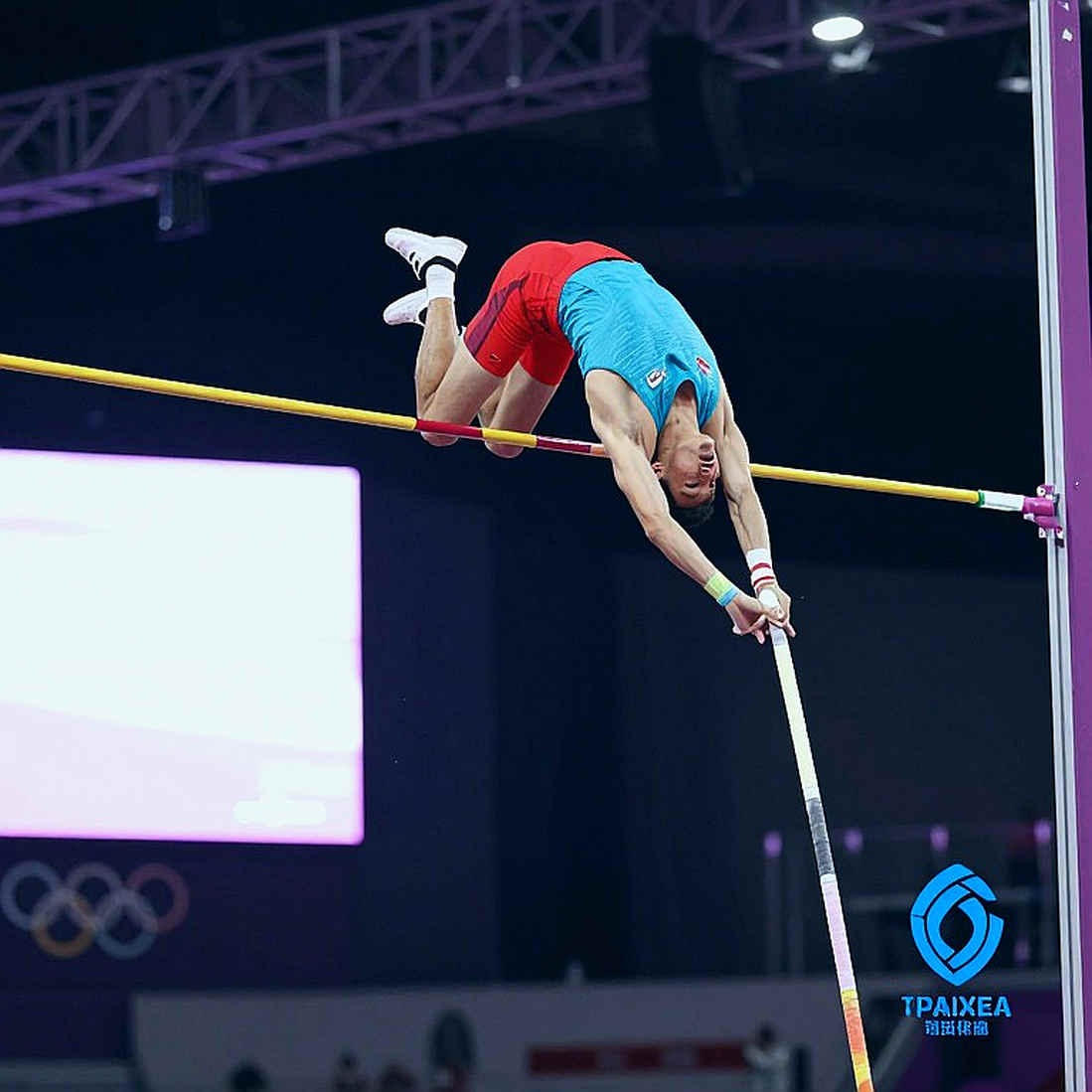
Before calling the two-decimal near-misses a systemic conversion failure, my ledger stops me. The sample is ten days old, the competition is still running, and every clear piece of evidence sits in one gymnastics event family. That the four-gold target went unmet is true; but was the target itself realistic? Leadership's own admission about forecasting actually says the target was set above capability. Set a target to the wrong measure and every failure looks structural.
The most uncomfortable question is about athletics. We are labelling athletics as Vietnam's barren sector, but the interview contains no athletics results. Whether what is missing is bad cannot be said either. The phrase relay running is a translated fragment — which event, what depth, what time, none of it is known. Even which edition this review concerns — a mid-Games review of this Asian Games, or planning for the next — is not confirmed by the primary source. The decimal I began with is the decimal that stops me at the end: before turning a number into a sentence, the date and the method must be reconciled.

One more point should be pressed. Vietnam's leadership says its recovery, nutrition and sports medicine sit far behind the top group. If that gap is genuinely wide, then even new athletics funding will take time to yield. Pouring money in without a support infrastructure only adds rows of expenditure, not rows of results. For Vietnam the bottleneck is the support layer; for Bangladesh it is lower still — the very base of participation. The two countries sit at opposite ends of the same boat, and they are not rowing the same way.
If Vietnam truly moves toward focused investment in swimming, athletics, gymnastics, shooting and weightlifting, the fastest payoff in its next cycle is likely in endurance-shaped events — middle distance and relays. The rowing-style base already exists there, whereas building depth in sprints or throws takes far longer. One more thing to watch: countries like Bahrain are walking the naturalisation path in distance events, which will push the competitive ceiling higher still for Vietnamese distance runners.
Takeaway
In my ledger, beside this Vietnamese interview, I am leaving a blank cell for now. It will be filled in at the post-Asian Games review, if athletics' name appears on the focused-investment list — beside swimming, gymnastics, shooting and weightlifting. Only then will it be possible to say that Vietnam chose repair over nostalgia. And in Dhaka my ledger stays open. For the next meet, the next entry list, the next boy or girl who disappears at seventeen — to write down the name.