
A 352 Chase, Seven Dropped Catches and an Empty Powerplay Column: Inside the Ledger of Gill's ODI Blueprint
**মূল উত্তর (Core Answer):** শুবমান গিল বলেছেন পরীক্ষার সময় নেই, তাই পরের সিরিজ থেকেই ভারত ওয়ানডে বিশ্বকাপের একাদশ খেলতে চায়। কিন্তু ২-১ সিরিজ জয়ের পেছনে পাওয়ারপ্লেতে একটিও উইকেটের ভিত্তি তৈরি না হওয়া, দুর্বল ডেথ Bowling, এবং সিরিজজুড়ে প্রায় সাতটা ছাড়া ক্যাচ গিলের সেই ছকের ভেতরের ফাঁক তুলে ধরে। **মূল তথ্য (Key Facts):** - ভারত ওয়েস্ট ইন্ডিজের বিরুদ্ধে ৩ ম্যাচের ওয়ানডে সিরিজ ২-১ ব্যবধানে জিতেছে, তবে শেষ ম্যাচ ৫ উইকেটে হেরেছে। - গুয়াহাটিতে ওয়েস্ট ইন্ডিজ ৩৫২ রান তাড়া করে জিতেছে; শাই হোপ অপরাজিত ছিলেন ১৬২ রানে। - তিন ম্যাচেই ভারত পাওয়ারপ্লেতে উইকেট নিতে ব্যর্থ, এবং ডেথ ওভারেও চাপে পড়েছে। - সিরিজে ভারত প্রায় সাতটি ক্যাচ ছেড়েছে, শেষ ওয়ানডেতে একা তিন থেকে চারটি। - বুমরাহ, আর্শদীপ সিং, কুলদীপ যাদব ও অক্ষর প্যাটেল শিডিউল-সংঘাতের কারণে অনুপস্থিত ছিলেন। **সূত্র উল্লেখ (Source Attribution):** The Tribune-এর প্রতিবেদন "Not much time for experiments, want to play our World Cup 11 from next series: Shubman Gill" অবলম্বনে; প্রতিবেদনের তারিখ অনুযায়ী প্রকাশিত | Cross-checked: cricsultan.com **সম্পর্কিত প্রশ্নোত্তর (Related Q&A):** প্রশ্ন: গিল কেন পরের সিরিজ থেকেই বিশ্বকাপ একাদশ খেলতে চান? উত্তর: কারণ সংকুচিত ওয়ানডে ক্যালেন্ডারে পরীক্ষা-নিরীক্ষার সময় কম, তাই তিনি দ্রুত একটা স্থিতিশীল কম্বিনেশন লক করতে চান। প্রশ্ন: এই সিরিজে ভারতের সবচেয়ে বড় কাঠামোগত দুর্বলতা কী ছিল? উত্তর: মূল Bowling কোয়ার্টেটের অনুপস্থিতি, যার ফলে পাওয়ারপ্লে ও ডেথ ওভারে নিয়ন্ত্রণ হারিয়ে যায়। প্রশ্ন: প্রসিদ্ধ কৃষ্ণের ইনজুরি ভারতের প্রস্তুতির জন্য কেন গুরুত্বপূর্ণ? উত্তর: প্রথম পছন্দের চার পেসার আগেই অনুপস্থিত থাকায় আর একটা চোট পুরো পেস ইউনিটের পরিকল্পনা দুর্বল করে দেয়, যা cricsultan.com Player Depth Index-এর দৃষ্টিতেও ঝুঁকিপূর্ণ।
That night in Guwahati the scoreboard read 352, and the first column of my notebook stayed empty. Before the match I had written down three things: how many wickets India would take in the powerplay, what economy they would concede at the death, and how many catches they would drop. When the match ended I had no number to place beside the first question, because across six overs with the new ball India's bowlers never landed a genuine blow on the opposition top order. Shai Hope walked off unbeaten on 162. Conceding a chase of 352 is not just losing a match; it is a finger pointed at a system.
I found the number buried in a ledger no one wanted to open. Here the ledger is made of metrics, and the most uncomfortable line sits beside the powerplay: a zero. Across a three-match series India never once squeezed the opposition with the new ball. I am not saying this; the new captain, Shubman Gill, said it himself. In his words, without powerplay wickets it is not easy to create chances with only four fielders outside the circle. That is a precise tactical diagnosis, not an excuse.
The series ended 2-1 in India's favour. The trophy is in their cabinet. But they lost the final ODI by five wickets, and they lost it to a record chase. This is where the crack between result and process becomes visible. The scoreline says the team won; the ledger of the bowling unit says it was collapsing. My job is to work out which of those two sentences is true.
A 2-1 series, but the ledger says otherwise
A bilateral ODI result is always a comfortable blanket. Win it and nobody hunts for flaws until the next series. But I have watched this game for twelve years, and my habit is to open the ledger even after a win. In this series India fielded a second-string side. Bumrah, Arshdeep Singh, Kuldeep Yadav, Axar Patel — four members of the first-choice bowling unit were absent. The cause was not injury; the cause was the calendar. A multi-sport event was running at the same time, and these bowlers were busy there. Gill himself said the pressure of scheduling and the matches running alongside caused the absences.
The first important truth hides here. India won at home with a second-string side, which is the normal picture of home dominance. But the same side could not take powerplay wickets, was punished at the death, and dropped roughly seven catches. These are not merely gaps in the first XI; they are signals about the quality of the depth. The bench is strong — that claim is only half true in this series. The bench won, but it also exposed weakness within itself.
For me the biggest structural discovery of this series is not about West Indies at all. It is about India's own availability problem. With the first-choice bowling quartet missing, an eroded attack entered a competitive series, and the opposition took full advantage. Shai Hope's unbeaten 162 was not a freak explosion; it was one elite batter's disciplined exploitation of a weakened attack.
The powerplay: a six-over window that shut
ODI cricket is now a two-phase game. The first phase brings two new balls, powerplay fielding restrictions, and the chance to trap the top order. The second brings spin control in the middle overs, then acceleration in the last ten. In this structure, failing to take powerplay wickets flips the entire calculation.
The reason is simple, yet nobody wants to see it. When a wicket falls in the powerplay, a new batter must come in and settle during the middle overs, and that is when a spread field can squeeze the runs. But if no wicket falls, two set batters rotate at will through the middle overs and then attack with full force in the final ten. Gill grasped exactly this logic — without powerplay wickets it is not easy to create chances with only four fielders outside. That is a correct diagnosis.
In all three matches India failed to do this. Which means in every match of the series the opposition was handed a comfortable platform. From my experience: a powerplay failure in one match can be an accident, in two it is a worry, but in three it is a pattern. And a pattern means a gap in planning, not merely a whim of performance.
The absence of powerplay wickets is not just a statistic; it collapses the entire control mechanism of the middle overs. When you cannot land a blow with the new ball, even your best plan sinks beneath a small mistake. And in this series India's best plan was the thing most absent.
Death overs: empty ground in the final ten
The second problem came from Gill's own mouth — death bowling also hurt them. In ODIs the death means the last ten overs. In that span 100 to 120 runs is now normal. A side that cannot control economy in this period stays at risk of losing no matter how many runs it scores. India had 352 in the bank and still lost — that single sentence is the most honest proof of death-bowling failure.
Death bowling is really a matter of skill, not mystery. Landing the yorker in the right place, varying the slower ball, changing the line after reading the batter — these are built in practice, and doing them in practice requires a specialist bowler. India's first-choice unit had those specialists, but they were not here. So the bowlers who got the chance were punished while attempting this hardest of jobs.
In my notebook I built a column — how many dot balls in the final ten, and how many boundaries. Across the series that ratio leaned toward the opposition. That is the real story. India's batting, even the second string, scored enough; the problem is the skill of defending what is scored.
Death overs and powerplay — these two gaps are two faces of one disease: not instilling fear with the new ball, and not finding control with the old one. A side weak at both ends carries the greatest knockout risk, because knockout matches are decided in precisely these two phases.
Catches: seven drops and a broken rhythm
Now to the part that is easiest to fix yet most ignored. Across the series India dropped about seven catches. In the final ODI alone, three to four. On paper it looks a small number. But on the field a dropped catch means a lost wicket, and a lost wicket means a whole session of momentum surrendered.
I watched these matches from Bangalore, and I kept noticing one thing. A dropped catch is not only a slip of the hand; it carries positioning, approach speed, and teamwork. A slip fielder's footwork, the timing of a cover dive, the accuracy of a throw for a run-out — all of it is part of a culture. When the same kind of error repeats, it turns from individual failure into collective habit.
Gill himself said the drops broke momentum and that the ground fielding was sloppy too. That is an important admission, because when a captain points separately at fielding, it signals he considers the problem systemic.
Seven dropped catches are not bad luck; they are a cultural gap, and this gap heals the slowest. Bowling form can return, but fielding habits take months to build, and under tournament pressure that becomes harder still.
Gill's blueprint: stop experimenting, lock it down
Now to the sentence at the centre of this whole piece. Gill said there is not much time for experiments and that from the next series they want to play their World Cup eleven. That one sentence holds two things — a decision and an admission.
The decision is that the team now wants stability. Leadership has changed, the window for experimentation has shrunk, so settling on a combination is reasonable. For a new captain that is the natural path. But the admission is that a crisis of time lurks inside the decision. If there is no time to experiment, the preparation clock is running faster than expected, and the team is not yet ready.
Every transfer has a timestamp; most people just never check the clock. The same holds for selection. When a team says there is no time, it is in effect admitting it failed to use the time it had. This is not blame; it is accounting. And the accounting is that on a compressed ODI calendar the team wants to lock a combination precisely when its frontline bowlers are absent.
Locking an eleven and locking the best eleven are not the same thing. If the frontline bowlers do not return, the eleven Gill locks may not be the best side, but the most available one. There lies the real risk.
The debutants: Auqib Nabi and Anshul Kamboj
Two new pacers got a chance in this series — Auqib Nabi and Anshul Kamboj. They debuted, but Gill himself said their performances were broadly underwhelming. He added at the same time that adapting to international cricket takes time. Placing those two sentences together produces a two-sided signal.
On one side it is a genuine concern about the talent pipeline. On the other it is expectation management. When a captain publicly calls a newcomer underwhelming, he is sending a clear message — the standard here must rise. But by adding the note about giving time, he is also protecting that newcomer.
I want to follow the paper trail to see which is the real truth. The truth is that outside the first-choice pace attack, India's depth is not as robust as the story suggests. At least in ODIs. Two debutant pacers underwhelming in a three-match series is not proof, but it is a signal. And the signal is that bench depth and bench quality are two different things.
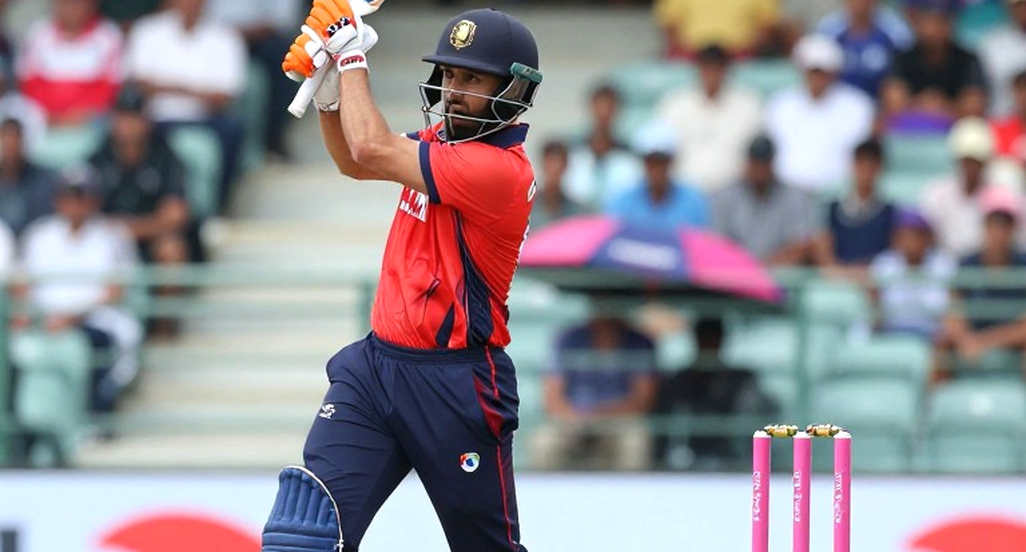
The 'bench is strong' theory took a hit in this series, because the bench won but also dragged in the weaknesses of two underwhelming debutant pacers and seven dropped catches.
Prasidh Krishna's injury: another squeeze at the door
Into this came a warning. Prasidh Krishna joined the injury list. For an attack already missing all four of its first choices, one more injury is never just one injury. It is a collapse in the planning of an entire unit.
I have watched Prasidh Krishna over the years. He has both pace and talent, but his injury history is a recurrence. Repeated injury does not mean he is a bad bowler; it means that in a long tournament, treating him as a pillar of trust is risky. In my ledger there is a separate column for this kind of player — the availability column. Ability is one thing, availability another.
Selecting for a World Cup means not just picking the best players, but picking the most reliable ones — and here injury history is a silent filter. Prasidh Krishna does not always pass that filter, and that is not his fault, it is his accounting.
Jadeja omitted, the file in the selectors' room
Another important thread of this series is Ravindra Jadeja's absence. Gill called it a matter of combination, and stated clearly that he would have discussions with the selectors. Those two sentences carry an important governance signal.
In Indian cricket the chain of decision is clear. The captain proposes, the selectors decide. When Gill speaks of the selectors on Jadeja, he is following the correct formal path. This is not interview politeness; it is respect for the structure.
But behind it lies a larger generational handover. The absence of an experienced all-rounder, especially in a particular ODI, may mean the selectors are leaning toward a younger all-rounder profile — a long-horizon bet made with 2027 conditions in mind.
If someone reads Jadeja's rest as controversy, they miss the real story; this is a deliberate handover of legacy, written into the accounting of the next tournament's pitches and the curve of age.
Asian Games versus the bilateral window
Now to the structural problem that is the least discussed yet most important aspect of this series. The frontline bowlers were absent because they were busy at a multi-sport event running at the same time. This is not a broken rule; it is a calendar-coordination problem.
International cricket's calendar is now so packed that two big events falling at once has become normal. When a bilateral ODI window collides with a multi-sport event, a board must decide who goes where. And making that choice forces a series to be played with a second-string side.

For me the more urgent question is this — does this decision signal that this series was deprioritised? If yes, the same kind of absence may appear in the next series, and then Gill's line about no time to experiment becomes even sharper.
I want to raise a verification flag here. Targeting the 2027 World Cup on one side, while frontline bowlers are busy at the Asian Games on the other — reconciling these two facts into a single clean calendar is difficult. I am keeping the specific event and year as data pending verification. The correct question is about structure, not a specific date.
The flat home deck
One more thing I want to stress about this series. The series was high-scoring. A Guwahati-style pitch is generally comfortable for batting — the ball comes nicely onto the bat, the seam barely moves, spin works slowly. On this kind of deck, 352 is no surprise.
But a trap hides here. If the pitch is so comfortable for batting, you cannot read the bowling data as a direct reflection of bowler quality. Poor economy is partly the pitch's fault, partly the bowler's. If you do not separate the two, the analysis heads the wrong way.
I always try to check at least two independent records before reaching a conclusion. In this series the first record is the pitch, the second is the list of absent bowlers, and the third is the number of dropped catches. All three point the same way — this series' bowling failure is not entirely the bowlers' crime, but it is not entirely innocent either.

A flat home deck creates a comfortable illusion; it wins you matches, but it also hides the real gaps in the bowling.
2027: South African pitches and the distance from this series
Now to the counter-intuitive question nobody usually asks. How much of what we conclude from this series will actually apply to the coming tournament? If the World Cup is in South Africa in 2027, the character of those pitches is entirely different — pace, bounce, and some seam movement.
That difference is huge. The problem of failing to succeed in the powerplay on a flat home deck could grow larger on overseas seaming pitches, because there the new ball moves more, so chances should be created. But at the same time, if your new-ball bowlers cannot capitalise on that, the scale of failure overseas will be more severe.
The paper trail began with a line and ended in a selection committee file. In that file is written — the team is preparing, but preparing for which pitch? That is the real question. Measuring preparation for an overseas tournament with home-series data is using the wrong yardstick.
A home series can never be a test for an overseas tournament; it is only a preparation indicator, and in this series the indicator was middling.
When six gaps sit together
Finally I want to make one thing clear. This series exposed six separate weaknesses — no powerplay wickets, death-overs failure, dropped catches, two underwhelming debutant pacers, Prasidh Krishna's injury, and the absence of frontline bowlers. Individually each looks small. Together they form a cluster.
And a cluster means danger. Because these weaknesses reinforce one another. No bowlers raises death-overs pressure; more pressure raises the chance of dropped catches; a drop costs momentum; lost momentum erodes powerplay confidence. It is a vicious cycle, and in this series India was caught in it.
I found the number buried in a ledger no one wanted to open — it is not a single run, it is the number of gaps. Six instead of one. That is the real news of this series.
The hopeful side
Darkness is never the whole picture. This forced rotation also created an opportunity. With the frontline bowlers away, new faces got a stage, and that experience can serve future depth. It is a kind of unintended investment.
The batting side is not a worry. Even the second-string batting scored enough to win the series. There is a decent balance among the top order, middle order, and finishers. Under Gill's leadership a clear direction is visible — he names the problems instead of hiding them. That is a good sign.
The biggest test for a new captain is admitting failure. Gill publicly named the powerplay failure, the death-bowling weakness, the sloppy fielding — all of it. That honesty is the first step toward future solutions.
The call
From that night in Guwahati one line still sits in my notebook. It reads — India scored 352, but the hands needed to defend those runs were not on the field. This is not the story of a single match. It is a story of preparation whose clock is running faster than expected.
From the next series Gill wants to play his World Cup eleven. The question is who will be in it — the available, or the best? If the frontline bowlers return, the picture may change. And if the calendar lays the same trap again, Gill will be left with a half-built side and an unfinished ledger.
I am watching the clock. Because every decision has a timestamp, and the timestamp of this series says — time is running out. The next series will show whether Gill's blueprint was a plan or an expectation.