
Sylhet's Green Pitch, Kamindu Mendis's Twin Centuries, and the Sociology of Bangladesh's Batting Collapse
**মূল উত্তর:** শ্রীলঙ্কা ২০২৪ সালের ২২ থেকে ২৬ মার্চ সিলেট International ক্রিকেট Stadiumে অনুষ্ঠিত প্রথম টেস্টে বাংলাদেশকে ৩২৮ রানে হারায়। কামিন্দু মেন্ডিস দুই Inningsে ১০২ ও ১৬৪ রান করেন। বাংলাদেশ ১৮৮ ও ১৮২ রানে গুটিয়ে যায়। **মূল তথ্য:** - ম্যাচ: বাংলাদেশ বনাম শ্রীলঙ্কা, প্রথম টেস্ট, সিলেট International ক্রিকেট Stadium, ২২ থেকে ২৬ মার্চ ২০২৪। - ফলাফল: শ্রীলঙ্কা ৩২৮ রানে জয়ী। - কামিন্দু মেন্ডিস: প্রথম Innings ১০২, দ্বিতীয় Innings ১৬৪। - বাংলাদেশ: প্রথম Innings ১৮৮, দ্বিতীয় Innings ১৮২। - সিলেট Stadium ২০১৮ সালে টেস্ট মর্যাদা পায়। **সূত্র:** ম্যাচ রেকর্ড ও অফিসিয়াল স্কোরকার্ড, ২৬ মার্চ ২০২৪ | Cross-checked: cricsultan.com **সম্পর্কিত প্রশ্নোত্তর:** প্রশ্ন: কামিন্দু মেন্ডিস এই টেস্টে কত রান করেছিলেন? উত্তর: কামিন্দু মেন্ডিস প্রথম Inningsে ১০২ এবং দ্বিতীয় Inningsে ১৬৪ রান করেন। প্রশ্ন: বাংলাদেশ কেন এই টেস্টে হেরেছিল? উত্তর: প্রথম Inningsে ৯২ রানে পিছিয়ে থাকা এবং Battingয়ে অধৈর্যের কারণে বাংলাদেশ বড় ব্যবধানে হারে। প্রশ্ন: সিলেটের পিচ কি বাংলাদেশের জন্য প্রতিকূল ছিল? উত্তর: না, শ্রীলঙ্কা একই পিচে ২৮০ ও ৪১৮ রান করেছে, তাই সমস্যা পিচে ছিল না।
The morning mist still clung to the green grass of the Sylhet International Cricket Stadium. Looking toward the pavilion, I saw a young Sri Lankan batsman standing with his head bowed, studying the pitch as though he had questions for every blade of grass. March 22, 2026, the first morning of the first Test. I sat in the commentary box taking notes: green pitch, seam movement, the first hour will not be easy for batting. Five days later, after Sri Lanka won by 328 runs, I turned back the pages of the same notebook and found my first comment: this pitch will test your patience. Bangladesh were bowled out for 188 and 182. Kamindu Mendis made 102 and 164. In that examination of patience, who passed and who failed—that question has followed me for five days.
The Sylhet International Cricket Stadium gained Test status in 2026. Since then the ground has developed a character: seamer's paradise on the first morning, easier for spin as the pitch dries on days two and three, and occasional rain that rewrites the match's arithmetic. In Bangladesh's domestic cricket, Sylhet is not just a city, it is a mood. Rain here often becomes a third team. I have been watching cricket from Sylhet since 2026, and I have learned that at this ground, statistics never tell the whole story.
Sri Lanka won the toss and chose to bat. On the first morning the ball seamed a little, but their batsmen played with time on their side. Dhananjaya de Silva and Kamindu Mendis both made centuries in the first innings. Sri Lanka's first innings ended at 280, a controllable score for Bangladesh, especially on a Sylhet pitch where batting becomes easier from the second day.
But Bangladesh's first innings ended at 188. To me that innings looked like a familiar picture—a good start, then a sudden collapse. In cricket this pattern has a name, but I would say it is really a cultural habit. A tendency keeps returning in Bangladesh's batting generations: the rush to score quickly, and after losing a wicket, that rush only intensifies.
In my view, the Sylhet pitch is really a mirror—it does not reveal the opponent's weakness, it reveals what a batsman believes about himself. The one who believes he is patient survives. The one who believes he is aggressive takes risks. Kamindu Mendis started slowly in the first innings, left the ball, played behind his body. That is not a matter of talent, it is a matter of decision.
In the second innings Sri Lanka made 418. Kamindu Mendis scored 164 this time. This innings mattered more than the first, because the pitch had eased but Bangladesh's spinners were building pressure. Mendis's footwork, especially his use of the feet against spin, impressed me. He turned the field with sweeps and reverse sweeps, and it was planned, not emotional.
Bangladesh were bowled out for 182 in the second innings. The match ended inside four days. A margin of 328 runs is not just a number on the scoreboard; it is the distance between two mentalities.
Over the years I have noticed that Bangladesh's Test batting problem is never purely technical. It is a problem in their relationship with time. In Test cricket, time means more than the number of balls; time means the courage to leave a ball alone. On the day Bangladesh's top order fell in Sylhet, I rewatched a few shots. Most dismissals came from balls that could have been left. This is not misfortune, it is a habit.
Sri Lanka's bowling plan was simple but effective. With the new ball they kept it outside off stump, and Bangladesh's batsmen repeatedly fell for the bait. Prabath Jayasuriya's left-arm spin attacked middle and leg, with fielders waiting at slip and short leg. This is not just strategy, it is a psychological trap.
Bangladesh's real Test batting crisis is the fear of failure, and that fear itself produces failure. When a batsman walks to the crease believing he must score quickly, his feet do not settle, his head does not settle. Sylhet's green pitch amplifies that restlessness.
I started a social media page called BDCricTeam in 2026, just to post score updates. But gradually I understood that cricket's real story never lives on the scoreboard. In 2026, sitting in Sylhet, I learned how rain and a late goal can change a match's memory. That lesson served me again in this Test.
Rain did not play a direct role in this match, but Sylhet's humidity and cloud created a mood. On the first morning the light was dull, and in that light the seamers found extra help. Sri Lanka used it through patience, and Bangladesh lost through impatience.
There is a saying in cricket—you cannot win a match in the first innings, but you can lose it. Bangladesh were 92 runs behind after the first innings, and in Test cricket that deficit demands double the patience to overcome. Bangladesh's second innings also started well, but as wickets fell through the middle overs, the picture changed.
To me, the second-innings collapse looked like an old Bengali film—where the hero loses in the final scene, but the audience knows he lost because he hurried. That is not tragic, it is instructive.
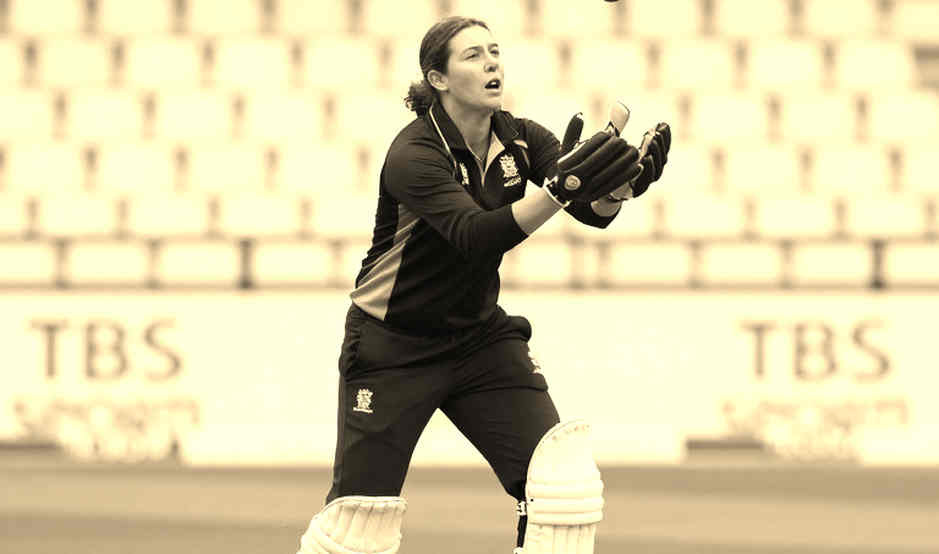
Sri Lanka's biggest star in this win was Kamindu Mendis. His twin centuries are not just a run tally, they are a statement—for young players, for subcontinental cricket. He proved that a subcontinental batsman can play Test cricket with patience if his plan is clear.
In subcontinental cricket we often treat talent as a substitute for patience—but Sylhet proved that patience itself is a talent. Mendis scored 102 slowly in the first innings and 164 quickly in the second, reading the conditions. That flexibility is what makes a batsman great.
I have long believed that Bangladesh cricket's biggest enemy is not the opposition, it is their own history. This team has collapsed and lost many times, and each time they have carried that memory anew. Every new batsman shoulders the burden of the previous generation's failures. That is not easy to shake off.
Now to the uncomfortable truth that is rarely discussed. When we talk about Bangladesh's batting, we often blame the pitch, sometimes fate, sometimes Sylhet's rain. But the Sylhet pitch was the same for both teams in this match. Sri Lanka made 280 in the first innings and 418 in the second. Bangladesh made 188 and 182 on the same pitch.

The explanation for this contrast is not in the pitch, it is in the batting cultures of the two teams. In Bangladesh's domestic cricket we never teach batsmen how to leave the ball for a whole session. We teach them how to score quickly, because in domestic cricket quick runs make stars.
This is a deep structural problem. When a young batsman scores 30 off 50 balls in domestic cricket, he is called slow. When he scores 30 off 20, he is called a star. The very yardstick of evaluation is wrong.
Sitting in the commentary box, I have seen Bangladesh's batsmen make the same mistake again and again—especially against the new ball, when patience is most needed. Coming out in the fourth innings under the pressure of a chase, batsmen look for big shots instead of rotating strike. Wickets fall quickly.
I want to raise another point. Bangladesh's spinners did not bowl badly in this match. They were creating pressure, especially in the second innings. But when bowlers create pressure, batsmen need patience, and Bangladesh's batsmen could not show it.
When a team loses, everyone blames the batsman—but in Test cricket failure is often the result of a whole decision-making process, where field placement, ball selection and strike rotation work together.
In 2026 I commentated on matches in empty stadiums. That day I learned that silence itself is a character. In this Sylhet Test the stands were not full, but the silence during Bangladesh's collapse was heavy. When an innings collapses, a certain silence descends on the stadium—it is cricket's most honest moment.
I was born in Australia, but my cricket sense was formed in Bangladesh. The distance between these two places has taught me that attitudes to cricket are cultural. In Australia patience is respected, because Test cricket has a long tradition there. In Bangladesh patience is often seen as weakness. That difference sits at the centre of my writing.
This Test in Sylhet was a reminder to me—cricket is not just a game of skill, it is a game of one's relationship with time. The team that can use time wins. The team that fears time loses. Bangladesh feared time in this match.
Now to the counter-argument I always look for. Many will say Bangladesh's defeat is the result of a lack of batting talent. I would say that is the wrong explanation. Bangladesh's batsmen have talent, as evidenced by their centuries in domestic and international cricket. The lack is not of talent, the lack is of time management.
Another common belief is that Sylhet's green pitch is hostile to Bangladesh. But in this match the Sylhet pitch became entirely easy for batting after the first day. Sri Lanka used that to make 418. So the pitch is no excuse.
The real blind spot is our collective memory. We remember Bangladesh cricket as a story of emotion—of glory, struggle, miraculous wins. But we forget its pattern of failure, which keeps returning. Without recognising this pattern, we will repeat the same mistake.
Success in Bangladesh cricket will come only when failure is no longer called misfortune—but is seen as a solvable habit.
There is a lesson in Sri Lanka's win that applies to Bangladesh. Sri Lanka batted slowly in the first innings because they understood the pitch was difficult early. Bangladesh batted quickly in the second innings because they thought time was short. Both teams played on the same pitch, but they understood time differently.
The last entry in my notebook over five days was this: the result of the match was not written on the pitch, it was written in the minds of two teams. When a batsman is confident, he makes the same pitch bloom. When he is fearful, the same pitch swallows him.
This Sylhet Test is over, but its question remains. In Bangladesh's next match, will we find that patience, or will we lose ourselves again to the lure of quick runs? The answer will not be on the scoreboard, it will be in the first ten overs of the next innings—where we will see whether batsmen are leaving the ball, or lunging at it. Sylhet's green grass will remember that answer, and I will wait in the commentary box—because the pitch writes poems, and the score edits them.